

The holidays are often described as a time of connection, celebration, and togetherness. But for many people, they also come with a less visible role: making sure everyone else is okay.
You may be the person who remembers which relatives are not speaking to each other. You know who is likely to feel left out, who will be offended if plans change, who needs reassurance, who cannot sit next to whom, and which topics should probably stay off the table. You may be the one adjusting the schedule, checking in on everyone’s mood, smoothing over awkward moments, and quietly taking responsibility for whether the gathering feels peaceful.
From the outside, this can look like being thoughtful, organized, or good at bringing people together.
From the inside, it can be exhausting.
The emotional labor during the holidays often extends far beyond planning meals, making magic for your kids as a parent, or buying gifts. It can include anticipating other people’s reactions, managing tension before it becomes conflict, monitoring your own words, absorbing disappointment, and trying to keep everyone comfortable at the same time.
When that role becomes automatic, the holidays can begin to feel less like something you participate in and more like something you manage.
The Mental Load During the Holidays Is Not Always Visible
Holiday responsibilities are easy to notice when they are concrete. Someone has to cook, shop, decorate, wrap presents, coordinate travel, clean the house, and remember what time everyone is arriving.
The emotional side of that work is harder to see.
The mental load during the holidays might include remembering that your sibling is sensitive about a certain subject, wondering whether your parent will be upset if you spend part of the day with your partner’s family, or trying to make sure a recently divorced relative does not feel awkward during dinner.
It can mean tracking everyone’s preferences and emotional needs while simultaneously managing your own.
You may find yourself thinking several steps ahead: If I invite this person, will that person be angry? If we leave at six instead of seven, will someone take it personally? Should I say something before dinner so nobody brings up politics? Who is going to sit with Grandma if she feels ignored?
None of these thoughts may seem dramatic by themselves. Together, they create a significant amount of emotional and cognitive work.
That work becomes especially draining when you feel responsible not simply for being kind, but for preventing anyone else from becoming disappointed, angry, uncomfortable, or upset.
When Caring Becomes People-Pleasing
There is nothing wrong with wanting the people you love to have a good holiday. Being considerate, flexible, and attentive to others is part of healthy relationships.
The difficulty begins when your own needs repeatedly disappear from the equation.
People-pleasing during the holidays can look like agreeing to plans you do not actually want, taking on more responsibilities because saying no feels uncomfortable, or spending time with people who leave you depleted because you feel guilty setting limits.
You may tell yourself, It is only one day, or I do not want to cause drama. Perhaps you stay longer than you want to, host when you would rather not, change traditions to keep someone from complaining, or tolerate comments that make you uncomfortable because confronting them feels worse.
In the short term, people-pleasing often works. The conflict is avoided. Someone else stays happy. The gathering continues.
But there is usually a cost.
When you repeatedly override your own limits to preserve everyone else’s comfort, resentment can begin to build beneath the surface.
You may feel irritated with people who did not technically ask you to take on so much. You may feel invisible or underappreciated. You may become frustrated that no one seems to notice how much work you are doing.
Sometimes the resentment is less about what others are doing and more about how little room you feel you have given yourself to say no.
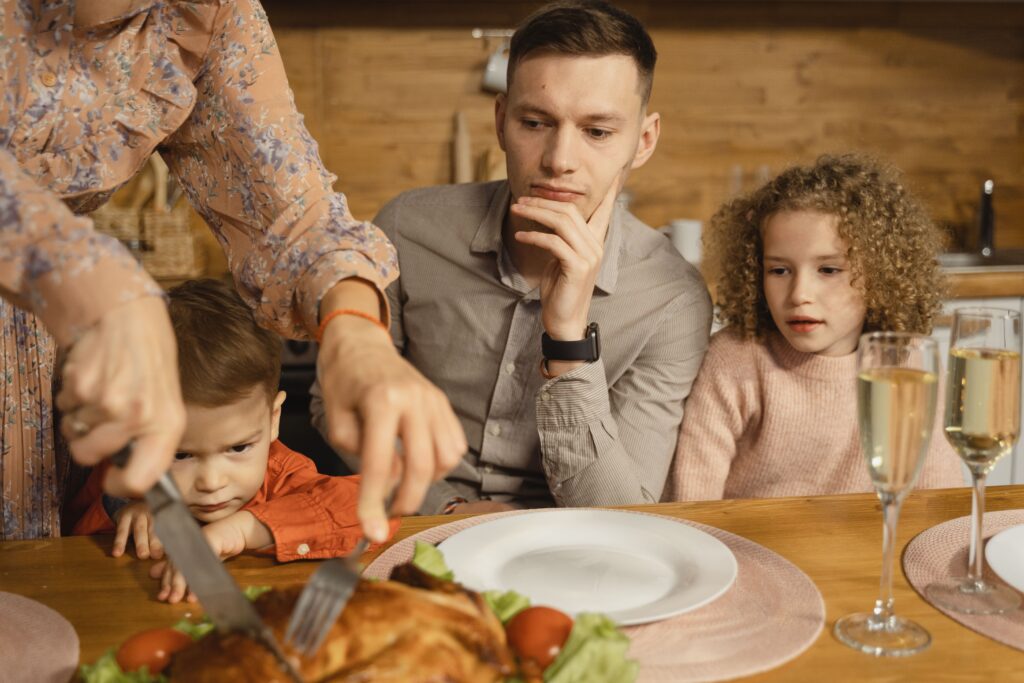
The Family Peacekeeper Role
Many people enter adulthood already knowing exactly what their role is in the family.
One person is the funny one. Another is the responsible one. Someone is expected to stay quiet. Someone else is the one everyone worries about.
And in some families, one person becomes the peacekeeper.
The peacekeeper notices tension quickly and often feels compelled to reduce it. They may change the subject, mediate disagreements, soften someone else’s words, reassure an upset parent, or explain one relative’s behavior to another.
This role may have developed for very understandable reasons. Perhaps conflict in your family felt unpredictable growing up. Maybe you learned that keeping people calm helped you feel safer. You may have received praise for being mature, easygoing, or the person who could “handle” everyone.
Those skills can be genuinely useful.
But when family peacekeeping becomes a responsibility rather than a choice, it can create enormous family holiday stress.
You begin attending gatherings with part of your attention already scanning for problems. Instead of simply being present, you are watching everyone else.
Is Mom getting irritated?
Is Dad drinking too much?
Does my partner look uncomfortable?
Is my sister going to bring that up again?
Is it time to change the subject?
This kind of vigilance can make even a relatively peaceful gathering feel exhausting.
You may leave the room feeling as though nothing went wrong, while your nervous system feels as though it spent six hours making sure nothing could.
Family Expectations During the Holidays Can Make Boundaries Harder
The holidays carry an unusual amount of expectation.
There are traditions, routines, cultural practices, family histories, and ideas about what you are “supposed” to do. Even relatively small changes can feel emotionally loaded.
Maybe your family assumes everyone spends the entire day together. Perhaps you are expected to travel every year, exchange gifts with everyone, attend several gatherings, or continue traditions that no longer fit your life.
Family expectations during the holidays can be particularly difficult when your circumstances have changed. You may now have a partner, children, different financial priorities, a demanding job, health concerns, or simply less tolerance for spending an entire weekend running from one obligation to another.
Changing an established pattern can trigger disappointment.
And if you are used to keeping everyone happy, someone else’s disappointment may feel like evidence that you have done something wrong.
But disappointment and wrongdoing are not the same thing.
Someone can dislike your boundary and your boundary can still be reasonable.
A relative can wish you were staying longer without you being obligated to stay.
A parent can feel sad that a tradition is changing without you being responsible for preventing that sadness.
Part of developing healthier holiday boundaries is learning to let other people have feelings about your decisions without automatically changing those decisions to make the feelings disappear.

Why Resentment Is Worth Paying Attention To
Resentment is often a sign that something has become unsustainable. It may point to places where you have agreed to too much, stayed quiet about what you need, or taken responsibility for making things easier for everyone else.
Maybe you host the holiday meal even though you did not want to, handle most of the preparation, and then feel angry when no one notices how much work it took. The frustration may seem to be about the dishes or the cleanup, but underneath it may be about a larger pattern of doing too much without asking for help.
Rather than judging resentment, it can be useful to ask what it is revealing about your limits, needs, or expectations.
Holiday Boundaries Do Not Have to Be Dramatic
Holiday boundaries can be simple and practical. They might mean leaving dinner earlier, spending less on gifts, declining to host, sharing responsibilities, or choosing not to engage in a conversation that feels harmful.
The harder part is often tolerating someone else’s reaction. If you are used to people pleasing during the holidays, you may feel pressure to over-explain or justify your decision until everyone approves of it.
But a reasonable boundary does not require unanimous agreement. Feeling uncomfortable when you set one does not necessarily mean you are doing something wrong. It may simply mean you are stepping out of a familiar role.
You Are Allowed to Participate in the Holiday, Too
Before the season gets busy, it can help to ask: What would make the holidays feel manageable for me?
That may mean attending fewer events, building in more downtime, letting go of a tradition that no longer works, or sharing responsibilities instead of automatically carrying them yourself.
It also means remembering that you can care about your family without managing everyone’s emotional experience. Other people may feel disappointed, frustrated, or uncomfortable, and you can still make choices that honor your own capacity.
For someone who has spent years keeping the peace, that shift can feel unfamiliar. It can also create much more room to actually be present for the holiday instead of spending it managing everyone else.
Creating More Room for Yourself This Holiday Season
The goal is not to stop caring about other people.
It is to make sure caring for others does not require continually abandoning yourself.
If you notice holiday overwhelm building, pay attention to what you are carrying. Which responsibilities are actually yours? Which have you taken on automatically? Where are you saying yes because you want to, and where are you saying yes because you are afraid of what might happen if you say no?
The holidays may still include stress, awkward moments, competing needs, and family tension. Boundaries will not eliminate all of that.
But they can help you move through the season without assuming that everyone else’s comfort is your responsibility.
At Awakened Path Counseling, therapy can offer space to explore patterns of people-pleasing, family roles, resentment, anxiety, and the expectations you may have learned to carry. Understanding where these patterns come from can make it easier to decide which ones still serve you and which you are ready to change.
You deserve to experience the holidays as a person within your family, not only as the person working behind the scenes to hold everyone together.
About The Author