
If you spend any time on wellness-focused social media, you have probably encountered some version of the same message: Your cortisol is too high.
Maybe you have been told that waking up tired, feeling anxious, brain fog, weight gain, or feeling overwhelmed are all signs of a cortisol problem. The solution might be a “cortisol cocktail,” a supplement marketed for adrenal support, or another strategy designed to “balance your hormones.”
There is a reason these messages are appealing. When you are exhausted, anxious, or simply do not feel like yourself, having a clear explanation can feel reassuring. It can be even more appealing when the solution comes in the form of something relatively simple you can drink, buy, or add to your routine.
The symptoms themselves may be very real. The explanation, however, may be more complicated.
At Awakened Path Counseling, we believe in looking at the whole person: mind, body, relationships, environment, and emotional experiences. Hormones are absolutely part of that picture. But supporting holistic well-being means moving beyond wellness trends and trying to understand what your body may actually be communicating.
What Does Cortisol Actually Do?
Cortisol is often called the “stress hormone,” which has given it a somewhat negative reputation. But cortisol is not something your body needs to eliminate.
Cortisol helps regulate blood pressure, inflammation, metabolism, blood sugar, immune function, and the body’s response to stress.
Cortisol levels also naturally change throughout the day. This is one reason medical cortisol testing may need to occur at particular times rather than relying on one isolated number.
When you encounter a stressful situation, cortisol helps make energy available so your body can respond. That is useful when you have to react quickly to danger, but the same system can become activated by emotional stress, work demands, relationship conflict, uncertainty, trauma, lack of sleep, caregiving, or overwhelm.
The goal, then, is not to have “no cortisol.” It is for the body’s stress-response systems to be able to activate when needed and settle again when the threat or demand has passed.
What Is a Cortisol Cocktail?
Recipes vary, but the viral “cortisol cocktail,” also called an “adrenal cocktail,” commonly includes some combination of orange juice, coconut water, sea salt, lemon, coconut milk, or other ingredients meant to provide vitamin C and electrolytes.
The premise is usually that chronic stress has depleted the body and that certain nutrients can help “replenish the adrenals,” lower cortisol, increase energy, or restore hormone balance.
There is nothing inherently magical about the ingredients. Orange juice provides vitamin C and carbohydrates. Coconut water contains fluid and electrolytes. Salt provides sodium. If you enjoy the drink and it works for your individual nutritional needs, it can simply be a beverage.
What research does not currently show is that drinking this combination lowers elevated cortisol or repairs stressed-out adrenal glands. Cleveland Clinic endocrinologist Pratibha Rao, MD, notes that while the drinks can provide hydration and nutrients, there is no evidence that they specifically improve adrenal function or lower cortisol.
For some people, these drinks may also provide more sodium, sugar, or potassium than is appropriate for their health needs, particularly for individuals managing diabetes or certain kidney conditions.
That does not mean you need to throw away your coconut water. It simply means a pleasant drink and a treatment for a hormone disorder are two very different things.

What About “Adrenal Fatigue”?
The concept of adrenal fatigue is closely connected to cortisol wellness culture.
The theory suggests that ongoing stress eventually exhausts the adrenal glands until they can no longer produce enough cortisol. Symptoms attributed to adrenal fatigue can include fatigue, sleep problems, cravings, low energy, brain fog, and difficulty managing stress.
These symptoms deserve attention.
“Adrenal fatigue,” however, is not currently recognized as a medical diagnosis. The Endocrine Society states that there is no scientific evidence showing that chronic psychological or physical stress causes the adrenal glands to become fatigued in this way.
This distinction is important because adrenal insufficiency is a real medical condition in which the body does not make enough cortisol. It has identifiable causes and requires appropriate medical testing and treatment. It is not the same thing as feeling depleted after prolonged stress.
The problem with attaching a broad collection of symptoms to an unproven condition is that other explanations may be overlooked.
Persistent fatigue, poor sleep, changes in appetite, anxiety, difficulty concentrating, and feeling emotionally depleted can occur for many reasons. Chronic stress is one possibility. So are depression, anxiety, trauma, sleep disorders, nutritional issues, medication effects, thyroid conditions, and other physical health concerns.
Your symptoms do not become less legitimate because “adrenal fatigue” may not be the correct label.
They may simply require more curiosity.
The Appeal of a Simple Explanation
There is also an emotional side to wellness trends that deserves consideration.
When you have not felt well for a long time, uncertainty can be uncomfortable. A social media video that says, “These five symptoms mean your cortisol is too high,” provides something the human brain loves: an answer.
Then comes a solution.
Drink this every morning.
Take this supplement.
Avoid these foods.
Follow this routine.
Fix your hormones.
For someone who already feels overwhelmed, a clear formula can provide a temporary sense of control.
Unfortunately, this can also create another form of pressure.
Suddenly, you may be monitoring your morning routine, your food choices, your sleep tracker, your supplements, your energy level, and every change in your body for evidence that your hormones are “balanced.”
Wellness can quietly become one more thing to perform correctly.
And when the promised transformation does not happen, people may blame themselves rather than questioning whether the promise was realistic in the first place.
Be Cautious With “Hormone-Balancing” Supplements
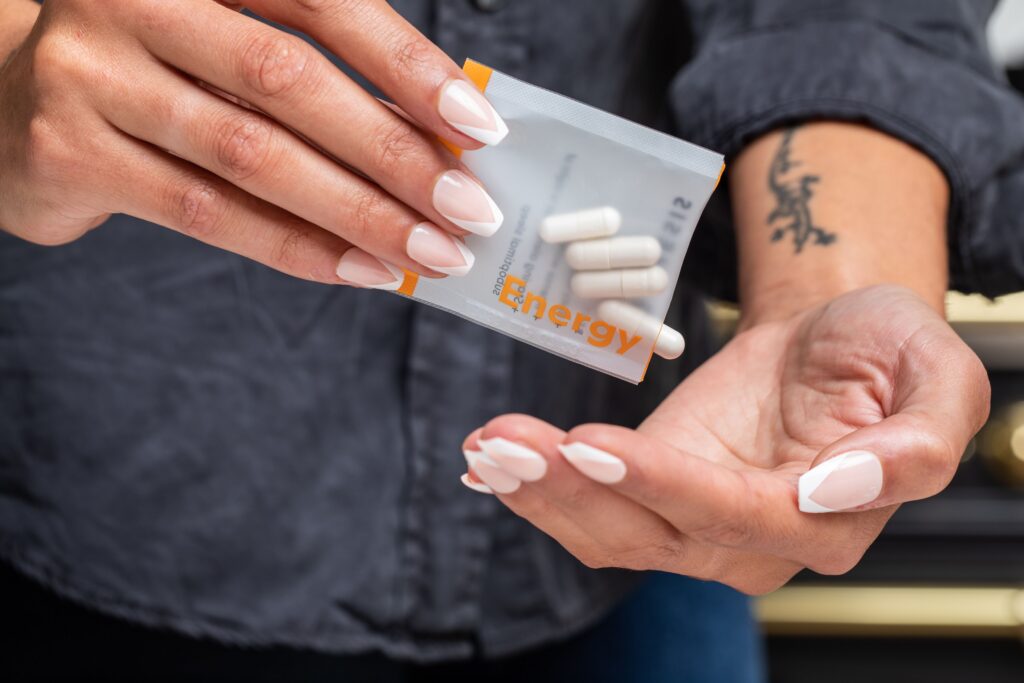
The same caution applies to supplements marketed for cortisol, adrenal health, hormone balance, stress, or energy.
“Natural” does not automatically mean ineffective, but it also does not automatically mean safe. Dietary supplements can contain biologically active ingredients, cause side effects, and interact with medications. The National Institutes of Health recommends discussing supplements with healthcare providers, particularly when taking prescription medications or combining multiple products.
What Actually Supports the Stress Response?
The less exciting answer is that supporting a stressed nervous system often involves practices we cannot package into a trendy drink.
Prioritize Rest and Sleep
Rest is not a reward you earn after becoming completely depleted.
Consistent, quality sleep plays an important role in emotional and physical health. Adults generally need at least seven hours of sleep, although individual needs vary. Sleep also supports mood, attention, memory, metabolism, and stress regulation.
Eat in a Way That Supports Your Body
Nutrition matters, but you do not need a perfect diet to support mental health.
Regular meals, adequate hydration, protein, fiber, carbohydrates, fats, fruits, and vegetables provide the body with resources it needs to function. At Awakened Path, we prefer to approach nutrition without moralizing food or dividing everything you eat into rigid categories of “good” and “bad.”
A holistic approach is less about finding the one ingredient that will fix you and more about noticing whether your body is receiving consistent nourishment.
Move Your Body in Ways That Feel Sustainable
Physical activity can support sleep, reduce symptoms of anxiety and depression, and improve overall health. Importantly, movement does not need to be punishing or extreme to count. Walking, yoga, stretching, gardening, dancing, or other enjoyable movement may be more sustainable than another wellness routine built around pushing your body harder.
Practice Nervous System Regulation
Mindfulness, slow breathing, guided imagery, and progressive muscle relaxation are examples of practices that may help activate the body’s relaxation response. Research suggests that techniques such as diaphragmatic breathing and mindfulness can help some people manage stress and anxiety.
These practices are not instant cortisol hacks. Their value is in giving the body repeated opportunities to experience safety, rest, and present-moment awareness.
And Sometimes, Stress Needs More Than a Lifestyle Hack
You can meditate, eat nutritious foods, go for walks, and maintain a carefully designed morning routine while still living with unresolved trauma, relationship conflict, grief, perfectionism, chronic anxiety, or responsibilities that exceed your emotional capacity.
Sometimes the nervous system is overwhelmed because life has actually been overwhelming.
That is where therapy can become an important part of holistic wellness.
At Awakened Path Counseling, our therapists look beyond the idea that difficult emotions are simply symptoms that need to be eliminated. We explore what may be contributing to stress, how past experiences influence current responses, where patterns of self-criticism or over-functioning developed, and what your body may be communicating when it has been asked to carry too much for too long.
Therapy does not diagnose or treat endocrine disorders. When physical symptoms suggest that medical evaluation is appropriate, working collaboratively with healthcare providers matters.
But therapy can help with the emotional side of chronic stress: learning to recognize your limits, developing more sustainable coping tools, improving nervous system regulation, setting boundaries, processing trauma or grief, and creating a life that does not require you to live in survival mode.
You Don’t Need to “Fix” Your Cortisol to Take Your Stress Seriously
Perhaps the most useful thing we can take from the cortisol conversation is this: people are tired.
They are stressed. They are sleeping poorly. They are juggling responsibilities, consuming constant information, worrying about the future, caring for other people, and wondering why their bodies no longer seem to keep up as easily as they once did.
Those experiences deserve attention.
But you do not need a viral diagnosis to justify taking them seriously.
Rather than immediately asking, “How do I lower my cortisol?” consider asking:
What has my mind and body been responding to lately?
The answer may lead to a richer conversation about sleep, nourishment, boundaries, relationships, trauma, anxiety, grief, work, rest, or the expectations you have been placing on yourself.
There may not be a cocktail that can resolve all of those things.
There can, however, be support.
If stress, anxiety, emotional exhaustion, or feeling constantly “on” has begun to affect your daily life, the therapists at Awakened Path Counseling in New Jersey can help you explore what is underneath the overwhelm. Through holistic, trauma-informed counseling, we can help you better understand the connection between your emotional experiences, nervous system, and overall well-being.
Reach out to Awakened Path Counseling to learn more about our holistic therapy services and find a therapist who can support you.
About The Author